Many business owners I speak with today are facing the same problem — they are working harder than ever, but growth is not matching the effort. Teams are busy, marketing is running, websites are live, but leads are inconsistent and operations feel scattered.
In my experience working with GCC clients, many businesses focus more on design than SEO structure or automation systems that actually bring consistent results. The result is simple: a good-looking business that is not performing at its full potential.
This is where AI automation for business is quietly becoming a game changer.
Not because it is trendy, but because it solves a very real problem — doing more work with fewer resources while improving speed, accuracy, and consistency.
Why AI Automation Matters for Business Growth
AI automation is not about replacing humans. It is about removing repetitive work so teams can focus on strategy, sales, and growth.
I have seen many businesses struggle with getting consistent traffic due to lack of content strategy and manual execution of marketing tasks. Teams spend hours writing posts, replying to customers, and updating spreadsheets — tasks that AI can now handle in seconds.
From my experience, companies that adopt automation early always gain a competitive advantage in:
- Faster marketing execution
- Better customer response time
- Improved lead generation
- More consistent content production
- Reduced operational cost
The difference is not small. In some cases, it completely changes how the business operates.
What Is AI Automation for Business?
AI automation for business means using artificial intelligence tools and systems to automatically perform repetitive tasks across different areas such as:
- Marketing and advertising
- Customer service
- Content creation
- Sales follow-ups
- Data analysis
- Email campaigns
- Social media posting
- Website optimization
Instead of manually doing every task, AI tools handle the execution while humans focus on decision-making.
One common mistake I notice is that websites are built without proper keyword targeting and no automation behind content or lead nurturing. This is why many businesses never reach consistent organic traffic.
How AI Automation Is Used in Real Businesses
Let’s break it down in a practical way based on real-world implementation I have seen.
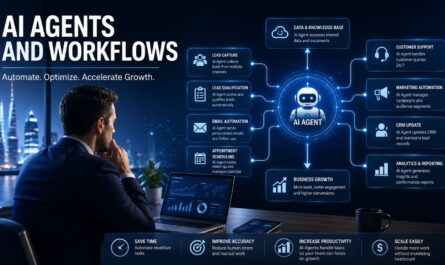
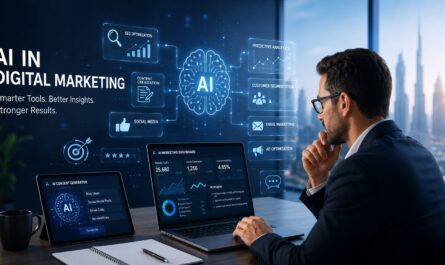
1. AI in Digital Marketing Automation
Marketing is one of the biggest areas where AI delivers immediate results.
Businesses now use AI to:
- Generate ad copies
- Test multiple creatives
- Optimize campaigns automatically
- Analyze customer behavior
In one of my projects, a client in the UAE reduced their ad management workload by almost 60% just by using AI-based campaign optimization tools combined with structured targeting.
The key was not just using AI, but setting up the right system.
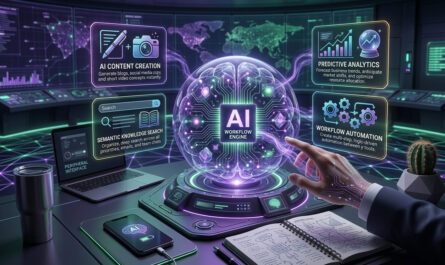
2. AI for Content Creation and SEO
Content is still the backbone of digital growth.
However, manual content creation slows everything down.
I have seen many businesses struggle because they publish one blog a month and expect results. That is not how SEO works anymore.
From my experience over the years, long-term SEO success depends on content quality, consistency, and backlinks.
AI now helps businesses:
- Generate blog outlines
- Write SEO drafts
- Suggest keywords
- Create product descriptions
- Optimize headings for search intent
A real example from my projects is a client who improved leads by restructuring their website and publishing consistent blog content supported by AI-assisted keyword research. Within a few months, organic traffic started replacing paid ads as the main lead source.
3. AI Chatbots and Customer Support Automation
Customer service is another area where AI makes a big difference.
Instead of hiring large support teams, businesses now use AI chatbots to:
- Answer FAQs instantly
- Capture leads 24/7
- Handle basic support requests
- Guide users to products or services
This is especially useful for SMEs that cannot afford large customer service departments.
One of the biggest improvements I have seen is response time. Businesses that used to take hours now respond in seconds.
That alone improves conversion rates.
4. AI in Sales Automation
Sales is where automation directly impacts revenue.
AI can help businesses:
- Follow up with leads automatically
- Score leads based on interest
- Send personalized emails
- Remind sales teams of hot prospects
I worked with a service-based business where leads were being lost due to delayed follow-ups. After implementing an automated follow-up system, conversion rates improved without increasing ad spend.
The lesson was simple: leads were already there — they just weren’t being handled properly.
5. AI for Business Operations and Productivity
AI is not just for marketing. It also improves internal operations.
Businesses are now using AI to:
- Generate reports automatically
- Manage schedules
- Organize tasks
- Analyze sales performance
- Reduce manual data entry
In startups especially, this saves a huge amount of time and reduces human error.
Practical Steps to Start AI Automation in Your Business
If you are planning to implement AI automation, here is a simple real-world approach I recommend:
Step 1: Identify Repetitive Tasks
Start by listing tasks that are done daily or weekly:
- Posting on social media
- Responding to inquiries
- Sending emails
- Updating reports
Step 2: Choose One Area First
Do not try to automate everything at once. Start with one area like marketing or customer support.
Step 3: Implement Simple AI Tools
Use basic tools first:
- AI content tools for writing
- Chatbots for website inquiries
- Email automation systems
Step 4: Build Workflows
Connect tools so they work together:
- Lead form → CRM → automated email sequence
- Website chat → chatbot → sales pipeline
Step 5: Monitor and Improve
Automation is not “set and forget.” It needs adjustments based on performance.
Common Mistakes Businesses Make with AI Automation
Based on my experience, these are the biggest mistakes I see:
1. Relying completely on AI without strategy
AI is a tool, not a business model.
2. Automating without understanding customer journey
If your funnel is wrong, automation will not fix it.
3. Ignoring content quality
AI-generated content without human review often lacks trust and conversion power.
4. Using too many tools at once
This creates confusion instead of efficiency.
5. Not connecting AI with business goals
Automation should always support revenue, not just convenience.
The Real Impact of AI Automation on Business Growth
AI automation is not just about saving time. It is about building systems that allow businesses to scale without increasing workload at the same speed.
I have seen companies double their output without doubling their team. I have also seen businesses reduce dependency on manual processes completely within months.
But the key difference is implementation. Businesses that treat AI as a strategy, not a shortcut, always win in the long run.
Final Expert Recommendation
If I had to summarize everything from my experience working with businesses in GCC, UAE, KSA, and international markets, it would be this:
Start small, but start properly.
Do not try to automate everything at once. Focus on marketing and lead generation first, because that is where AI delivers the fastest ROI.
Then expand into customer support and internal operations.
Most importantly, keep human strategy at the center. AI should support your business, not replace your thinking.
Businesses that combine experience, strategy, and AI automation will dominate the next phase of digital growth.